When planning commercial spaces, control rooms, or large-scale outdoor advertising projects, the most common frustration project managers and architects encounter when searching for “LED display prices” is getting the vague answer: “It depends.” This lack of transparency is unhelpful for early-stage project budgeting.
Core Answer: What is the Baseline Price per Square Foot for LED Wall Screens?
To directly address your budget planning needs, we first provide the industry average benchmark data for the global market in 2026:
-
Standard Commercial Indoor LED Displays: Typically between $50 and $150 per square foot.
-
High-End Indoor Fine Pitch Screens (P1.5 and below): Due to the extremely high density of lamp beads, prices are typically between $200 and $500+ per square foot.
-
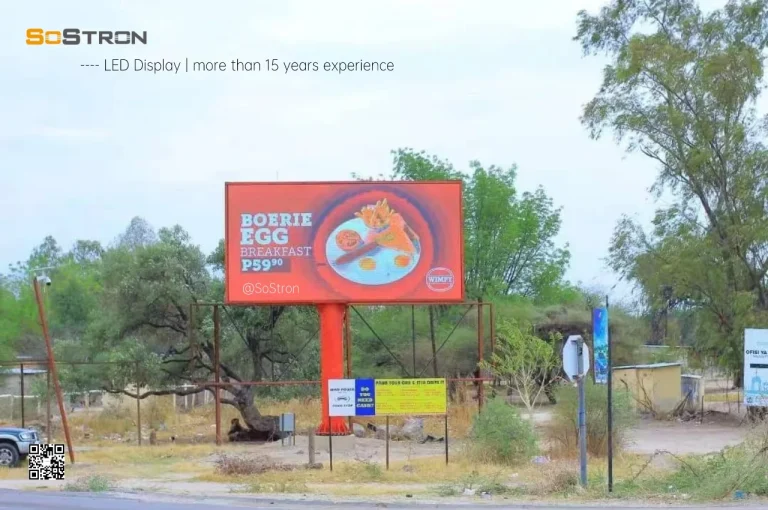
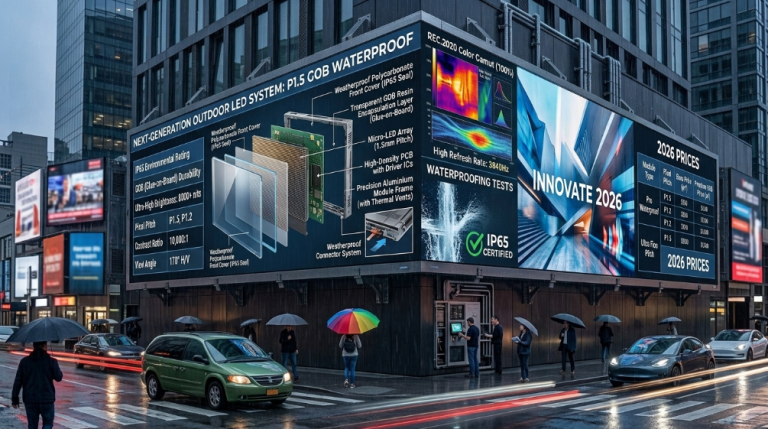
Standard Outdoor Waterproof LED Displays: Due to the requirement for high brightness and complex protective structures, prices are generally between $80 and $200 per square foot.
Data Reliability Statement:
The price ranges above are not theoretical estimates. This benchmark figure is extracted from a data sample of over 6,000 actual LED engineering delivery projects covering nearly 100 different countries over the past decade. By statistically analyzing and summarizing the hardware costs and engineering expenses of a massive number of real-world international projects, we have derived this highly statistically significant industry average benchmark to ensure the figures you see align with real-world industrial delivery conditions.
Indoor Display vs. Outdoor Display Price and Parameter Comparison Matrix
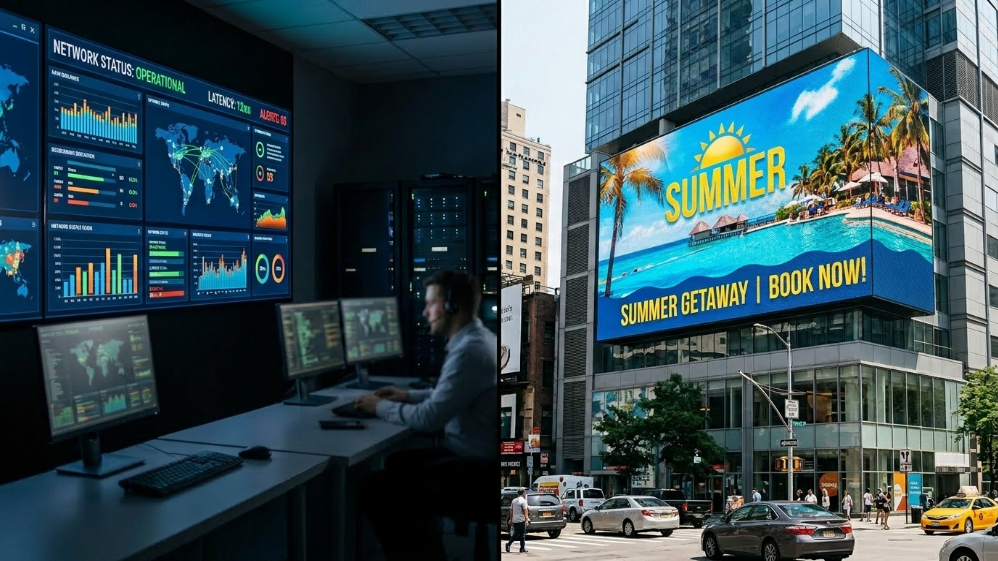
To more intuitively understand why application scenarios cause huge differences in price per square foot, please refer to the following engineering parameter comparison table:
| Application Environment | Average Price Range ($/sq.ft) | Typical Pixel Pitch (mm) | Brightness Requirement (Nits) | Protection Rating (IP) | Core Cost Driver Analysis |
| Standard Indoor | $50 – $150 | P2.0 – P4.0 | 600 – 1000 | IP40 | Focus is on color reproduction, refresh rate, and visual softness for close-range viewing. |
| High-End Indoor | $200 – $500+ | P0.9 – P1.5 | 600 – 800 | IP40 (some impact-resistant) | Extremely high-density SMD/COB packaging costs, and CNC machining costs for high-precision die-cast aluminum cabinets. |
| Standard Outdoor | $80 – $200 | P4.0 – P10.0 | 5000 – 10000 | IP65 / IP68 | Extremely high-brightness high-power LED beads, aviation-grade waterproof potting processes, and heat dissipation systems. |
Core Technical Variables Determining Cost per Square Foot (Deep Dismantling from an Engineer’s Perspective)
After understanding the base price, the next key question is: Why does the price for “indoor screens” span from $50 to $500? In the field of professional LED manufacturing, displays are highly modular electronic devices. The price per square foot is essentially a comprehensive reflection of the density of electronic components and material science within a unit area.
1. Pixel Pitch — The Absolute Core Price Engine
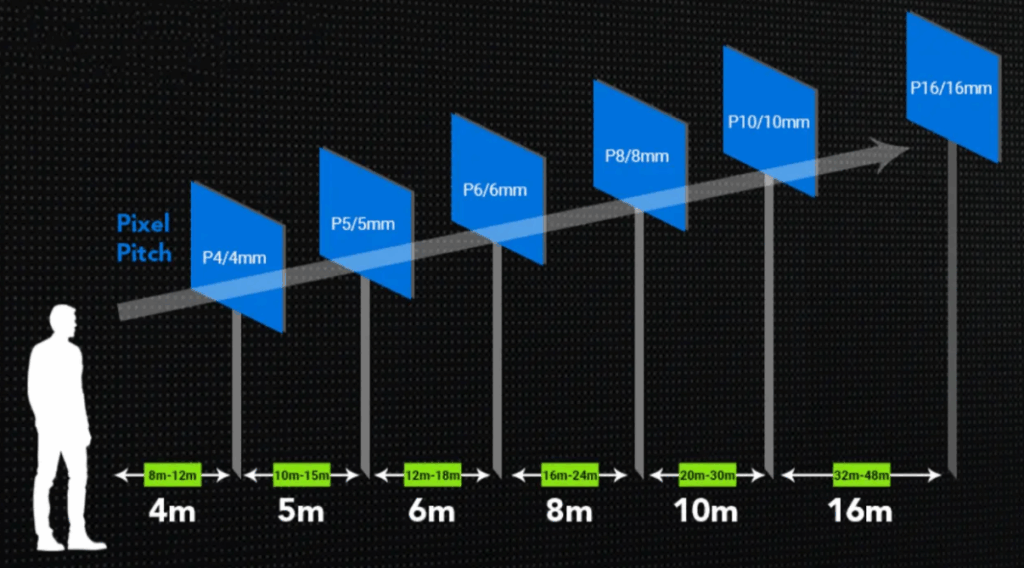
Pixel pitch (usually denoted by “P”, e.g., P2.5 represents a distance of 2.5 mm between the centers of adjacent pixels) is the physical metric that determines screen resolution and is the largest variable affecting the price per square foot.
From an engineering perspective, pixel pitch has an inverse-square relationship with the number of lamp beads per unit area. When you halve the pitch of a screen from P3.0 to P1.5, it does not simply double the number of lamp beads; it means the total number of LED lamp beads per square foot increases fourfold. This directly leads to an exponential increase in LED chip materials, SMT (Surface Mount Technology) assembly hours, and the number of driver ICs (Integrated Circuits).
Expert Advice: Blindly pursuing extremely small pitches is the most common cause of budget overruns. The rational approach is to reverse-calculate the P-value based on the audience’s “optimal viewing distance,” ensuring every dollar of the budget is spent on visible benefits.
2. Industrial-Grade Quality of Hardware Components and Scaled Manufacturing Differences
Even at the same pixel pitch, the quality of internal components can result in a price difference of several times per square foot.
-
Driver IC and Refresh Rate: There is a significant difference in IC chip costs between a standard 1920Hz and a broadcast-grade 3840Hz (or higher) refresh rate. A high refresh rate ensures the screen is free of “water ripples” under professional camera lenses.
-
Precision of Die-Cast Structures: (Technical Example) Taking the 16:9 precision die-cast aluminum cabinet commonly used in high-end indoor studios (e.g., 600mm x 337.5mm specification) as an example: to ensure that the physical gaps between multiple screens are smaller than the limit of human visual resolution, the CNC machining error of the cabinet must be controlled within 0.1 mm. This high-strength aviation aluminum and precision processing technology will naturally be amortized into the cost per square foot.
The Amortization Effect of Manufacturing Scale on Cost:
From the perspective of frontline industrial manufacturing, a modern standardized smart manufacturing base covering 15,000㎡ can greatly amortize the marginal costs of high-end component and precision cabinet R&D through highly automated SMT production lines, robotic arm assembly, and Automated Optical Inspection (AOI). This is why a mature industrial-grade manufacturing system can keep the final price per square foot within a reasonable engineering range while maintaining global quality control consistency.
3. Invisible Value: International Safety and Electromagnetic Compatibility Compliance Certification
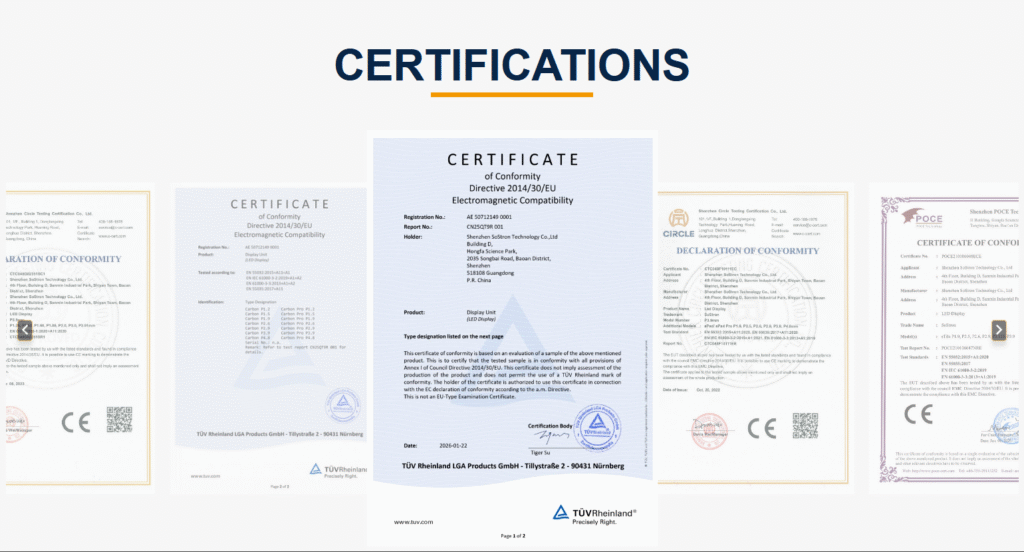
Many project purchasers often overlook an extremely important hidden cost when comparing prices: compliance and safety certification. Those unreasonably low price-per-square-foot quotes on the market almost never pass rigorous international certifications.
-
FCC and Electromagnetic Interference (EMI): Large LED walls contain thousands of electronic components operating at high frequencies. Low-quality screens generate severe electromagnetic radiation, interfering with surrounding Wi-Fi, radio, and even security communication networks. Screens that comply with US FCC standards require complex multi-layer PCB routing designs and shielding materials.
-
UL/CE and Fire Safety: Flame-retardant PCB boards, RoHS-compliant lead-free solder, and wide-voltage power supplies with redundant protection are the foundations for protecting commercial spaces from fire hazards.
Obtaining and continuously maintaining strict international certifications such as CE, RoHS, FCC, and UL means that an enterprise must invest huge compliance costs into underlying hardware R&D, EMC (Electromagnetic Compatibility) laboratory testing, and raw material supply chains. This “safety and compliance premium” reflected in the price per square foot is not an optional extra, but a prerequisite for the legal and compliant implementation of large commercial buildings, airports, and corporate lobbies.
4. Underlying Hardware and Software Architecture: The Impact of Turnkey Systems on Post-Maintenance Costs
Calculating the cost per square foot cannot stop at the light-emitting panels alone. Video Controllers, sending cards, receiving cards, and fiber optic transmission systems are all components of the total price.
Currently, two system ecosystems exist in the industry: one involves piecing together generic control cards and screens purchased fragmentarily from the market; the other consists of turnkey systems provided by manufacturing platforms with independent hardware, software, and engineering R&D teams.
From the experience of frontline R&D engineers, systems where the underlying hardware and software are entirely self-developed feature deeply optimized internal protocols and communication handshake mechanisms. In an initial quote, such a highly integrated system might have a hardware unit price per square foot similar to a pieced-together system; however, over a 5-to-10-year lifecycle, the self-developed architecture can greatly reduce hidden time costs related to software licensing, firmware upgrade conflicts, color calibration, and daily troubleshooting.
Total Cost of Ownership (TCO): The Real Budget Beyond the Square Foot
When project managers and system integrators receive a quote for display panels, they often find that the total cost of the final project implementation exceeds expectations. This is because budget calculation cannot rely solely on the “price per square foot of the panel.” To establish an accurate commercial plan, the concept of Total Cost of Ownership (TCO) must be introduced.
In field data feedback from over 6,000 global project deliveries, panel hardware costs usually account for only 50% to 70% of the total budget. Below are key cost components that must be considered but are often ignored:
Structural Engineering and Load-Bearing Installation Costs
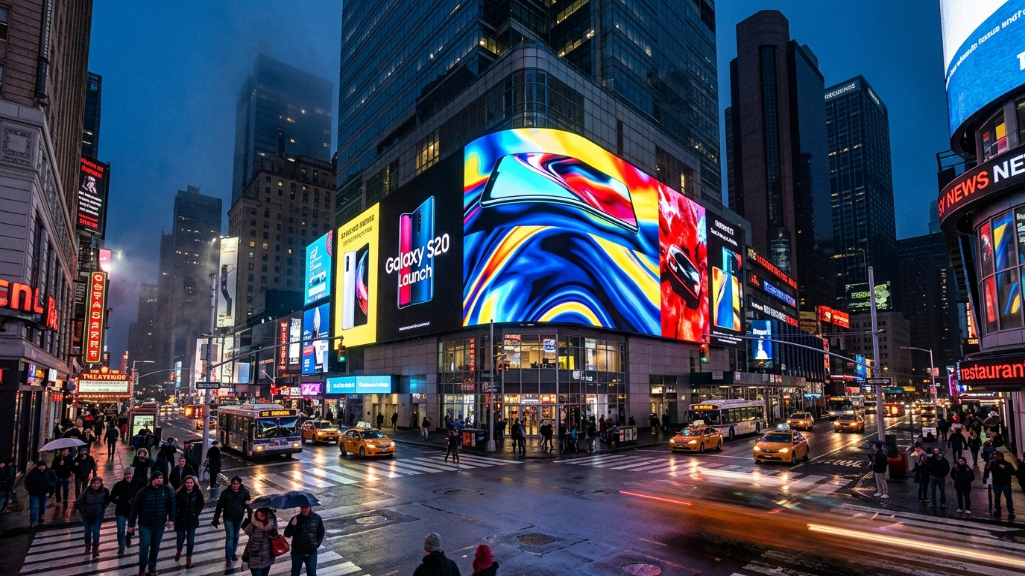
The weight of large LED walls and the requirements for wall flatness make complex structural engineering essential.
-
Custom Steel Structures: Depending on the nature of the building’s walls (such as concrete, gypsum board, or glass curtain wall load-bearing columns), a structural engineer must design a custom steel frame that meets local building safety codes. This steel and welding work significantly increases costs.
-
Installation Accessories: Will you choose traditional wall-mount brackets or expensive motorized front-maintenance hydraulic brackets? Although the latter requires a higher initial investment, it can greatly reduce post-maintenance labor costs when the screen is embedded in a wall.
-
Custom Irregular and Curved Designs: When designs require internal or external curved splicing, using flexible modules or custom irregular die-cast cabinets will generate additional mold R&D and manufacturing costs, which will significantly raise the unit price per square foot for that area.
Professional On-site Labor and System Debugging Fees
An LED wall system is not a “plug-and-play” consumer appliance; it is an optoelectronic system requiring precision calibration.
-
Professional AV Engineering Team: From the fine-tuning of physical splicing to the standardized laying of high and low-voltage cables, a skilled on-site construction team is required. In European and American markets where labor costs are high, this is a significant budget item.
-
Optical and Color Calibration: After the large screen splicing is completed, system-level colorimetry calibration is required to ensure the brightness and color of hundreds of thousands of lamp beads are highly consistent. This is also why turnkey solutions often save significant hourly wages during the debugging phase due to seamless hardware and software compatibility.
International Logistics, Packaging, and Tariff Considerations
Based on the project location, the logistics costs for international procurement fluctuate greatly.
-
Flight Cases: Professional LED displays are easily damaged during transport. High-quality shockproof flight case packaging is a must, but this significantly increases shipping weight and volume.
-
Shipping Methods and Tariffs: Sea freight is cheaper but takes longer; air freight is fast but expensive. Furthermore, different regions have different import tariffs and VAT policies for electronic display equipment, and these costs must also be reasonably assessed within the TCO model.
Real Case Engineering Data Dismantling: Budget Planning in a Multinational Environment
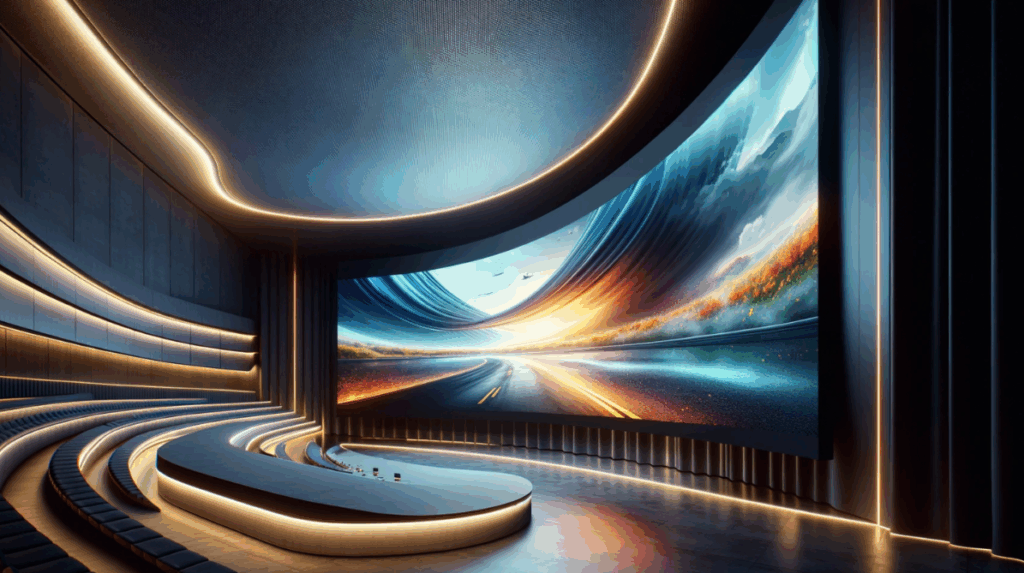
To concretize the theoretical data, we have extracted a representative global delivery project file as an engineering-grade reference for evaluating budgets.
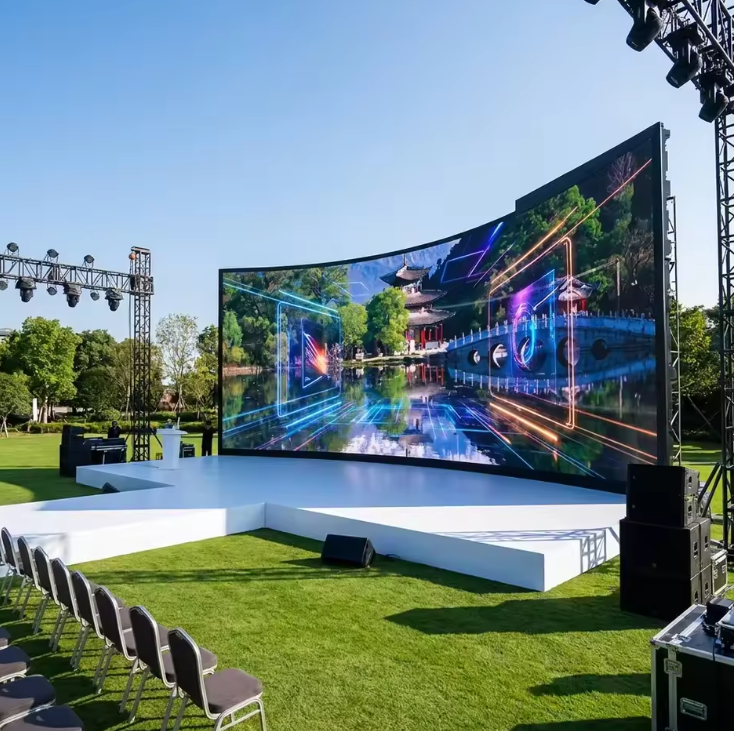
Engineering Instance: Curved LED Wall for a Large Corporate Headquarters Multi-functional Lobby
Project Technical Overview and Parameter Analysis:
-
Application Scenario: Core reception lobby on the first floor, high ambient light (large area of glass curtain walls).
-
Physical Form: Seamlessly spliced large internal curved wall.
-
Pixel Pitch: P2.5 (Indoor high definition).
-
Total Area Scale: Approximately 400 square feet (about 37 square meters).
Budget Composition and Decision Analysis (From an Engineer’s Perspective):
-
Decision Cost of Brightness Parameters: Due to strong natural light interference in the lobby, conventional indoor 600 Nits brightness could not meet the requirements. The project had to be upgraded to custom high-brightness SMD lamp beads of over 1000 Nits. This brightness upgrade based on environmental factors directly pulled up the base price per square foot.
-
Engineering Challenges of Curved Forms: A perfect curve cannot be achieved by piecing together rigid standard flat cabinets (which would result in visible physical angles). Therefore, the project adopted high-precision flexible LED modules combined with a custom curved load-bearing steel structure. The material cost of flexible PCB boards and the difficulty of on-site construction for non-standard structures were the second largest factors driving up the TCO of this project.
-
Long-term Reliability Redundancy of the System: As the core display window of a corporate headquarters, the system could not tolerate black-screen failures. Therefore, the control system adopted a self-developed architecture design with dual backup for power and signal. This enterprise-grade redundant design increased initial hardware costs but ensured extremely high stability for system operation.
Case Engineering Summary:
This real-world case clearly demonstrates that once a project involves high-brightness customization, irregular splicing, and high-redundancy control systems, its comprehensive cost per square foot will move away from the baseline range of basic commercial displays toward the high-end custom range.
Industry Frequently Asked Questions (FAQ)
In response to the questions most frequently asked by system integrators and architectural design teams when planning budgets, the following provides clear answers from a technical level:
Q1: How do I accurately calculate the total square foot area of the LED wall I need to plan?
Engineering Answer:
The calculation method depends on your requirements for the screen’s aspect ratio. The vast majority of video content is produced in standard 16:9 resolutions (such as 1920×1080 or 3840×2160).
-
First, determine either the physical Height or Width of the screen.
-
If Width is known, Height = Width × (9/16); if Height is known, Width = Height × (16/9).
-
Total Square Feet = Width (ft) × Height (ft).
When planning a budget, it is recommended to design the total area as close as possible to integer multiples of standard die-cast cabinet sizes to avoid extra customization fees from cutting non-standard cabinets.
Q2: From the perspective of cost per square foot, which is cheaper to buy: an LCD video wall or an LED video wall?
Engineering Answer:
This is a question about the intersection of initial investment and long-term costs.
-
Initial Hardware Cost: At standard commercial sizes, the unit price per square foot for LCD splicing screens is usually lower than that of seamless LED screens.
-
Long-term TCO and Visual Performance: The biggest physical limitation of LCD screens is the unavoidable bezel (seam), and over time, irreversible color differences appear between different LCD panels. An LED video wall is truly seamless and can be calibrated point-by-point via the system after brightness decay. In the long run, the visual lifespan and maintenance economy of an LED wall are superior. LED vs. LCD: Who is the king of outdoor viewing?
Q3: Why are screens that comply with international certifications like FCC and UL more expensive? Are these certifications mandatory?
Engineering Answer:
These certifications are rigorous tests of system safety and electromagnetic compliance, and they are usually mandatory for commercial buildings.
LED walls containing high-frequency video controllers generate a significant amount of electromagnetic interference (EMI). Obtaining FCC certification requires the use of shielded cables, high-purity PCB layouts, and special anti-interference components. UL certification, on the other hand, has strict requirements for flame-retardant materials and power supply design. Low-quality products lacking these certifications are extremely cheap but bring fire hazards and may even fail safety inspections by local building departments, potentially facing the risk of forced removal.
References: